PD Waste Tracking

For UK recycling and reprocessing yards

Every load in, every bale made, every report due. On the yard's tablets.

PD Waste Tracking runs a permitted site from the weighbridge to the PRN: goods in and out, transfer notes signed on screen, what each line produced, stock by container and weight, and the paperwork the Environment Agency and Defra ask for, worked out from what the yard already logs.

Works when the WiFi drops Unlimited logins per site Your data, kept 7 years
2 days

Every load a permitted site receives must be in Defra's digital waste tracking service by the end of the second working day (SI 2026/729, from 1 Oct 2026).

£1,000

The fixed penalty for each missed record, 50% more if paid late, with variable penalties on top.

7 years

How long packaging records must be kept. Monthly snapshots and a yearly archive in plain CSV are made for you.

0 retyping

The summary log, the quarterly return and the receipts come from the loads already logged at the weighbridge.

What it does

Built around how a yard actually moves material

Four places on site, one record. What the weighbridge enters is what the floor processes, what the office reports and what the regulator sees.

Weighbridge

Goods in and out

  • Full and empty weights, net worked out
  • Count bales, bags, IBCs and boxes; weight shared by ticket
  • Transfer notes signed on the tablet, emailed with photos
  • Carrier registration and pre-acceptance checks
  • Part or whole rejections, quarantine, sent back
The floor

What each line makes

  • Log each bale against the load it came from
  • Jobs per load: received, processed, still to do
  • Stock counts and stock checks with corrections
  • Photos on any record, bay locations remembered
  • Keeps working offline and catches up later
The office

Stock and the chain of custody

  • Stock by material, container and tonnes
  • Stock age against your storage limits
  • Mass balance per month: in, recycled, not
  • Any load traced to where it ended up, both ways
  • Schedule planned loads; every change logged
The regulator

Returns that write themselves

  • Digital waste tracking: receipts due, filed, overdue
  • Schedule 1 CSV, or sent to Defra by API
  • The GOV.UK packaging summary log, filled in
  • PRN evidence with an over-issue guard
  • EA quarterly return tonnes by EWC code

See it

The screens your staff use

Real screens from the app, on a month of demonstration data.

Jobs
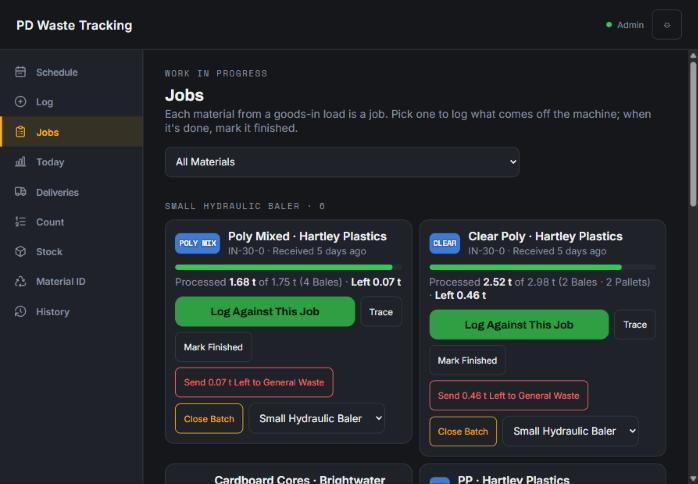
The Jobs screen: each goods-in load as a job, with tonnes processed, tonnes left and a button to log what the machine made
Jobs. Every load in becomes a job: what came in, what the line has made from it, what is left.
Stock
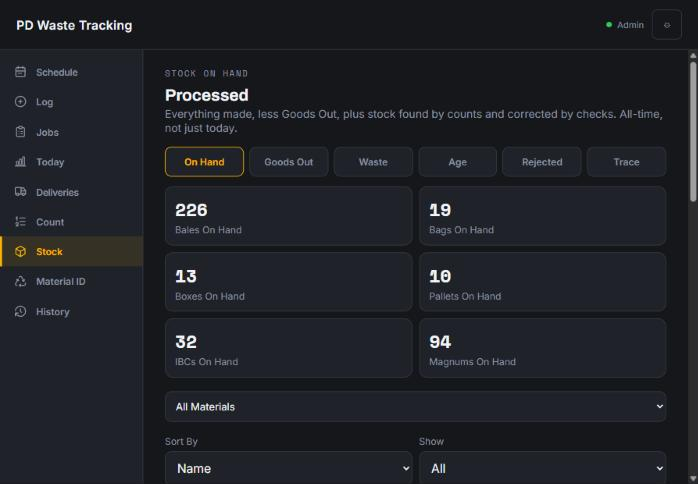
The Stock screen: bales, bags, boxes, pallets, IBCs and magnums on hand, with tabs for goods out, waste, age, rejected and trace
Stock. What is on site by container, worked out from what was logged, with its age and its trail.
History
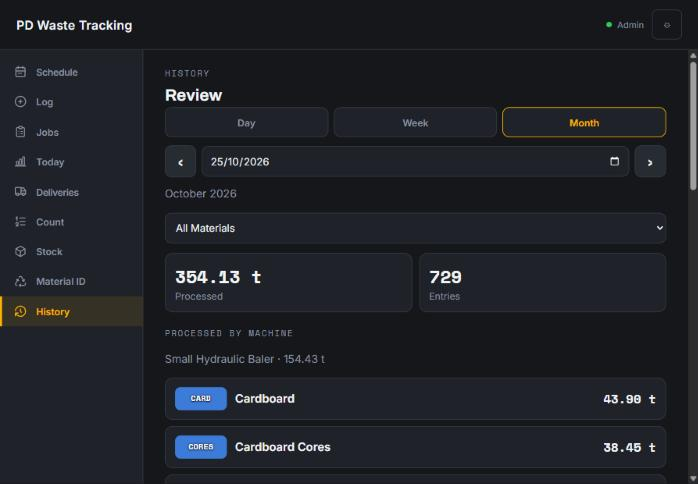
The History screen for October: 354 tonnes processed in 729 entries, broken down by machine and material
History. A day, a week or a month: tonnes by machine and material, ready to export.
Admin › Waste Tracking
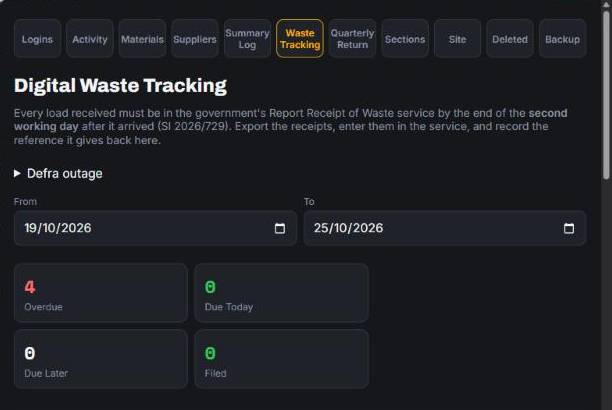
The digital waste tracking screen: receipts overdue, due today, due later and filed, for a date range
Waste tracking. Every receipt against its two-working-day deadline, and what each one still needs.

Company and supplier names in the screens are invented.

Why it holds up

Made for a cold yard, a patchy signal and an inspector's questions

01Nothing typed is lost

When the WiFi drops, tablets keep logging and send it all when they reconnect. Anything the server can't take is held for review, never thrown away.

02Stock is worked out, not kept

Stock is calculated from what was logged every time, so there is no running total to drift. Corrections come from stock checks and are shown as such.

03Every change is on record

Who logged, edited or removed what, and when. Operators correct their own entries for 8 hours; the office can correct anything, with the old value kept.

04Your server or ours

Hosted in a UK data centre, or installed on a PC at your site that you own. Either way it is one company, one database: your figures never share a system with another yard's.

05Backups you can read

A snapshot every 6 hours, one a month for 7 years, and each year's records as CSV files that open in Excel without the app.

06Plain on purpose

Big buttons for gloves, the yard's own words for tabs and sections, features you don't use switched off. Staff learn it in a morning.

Pricing

Per site, every login included

No charge per user, per load or per note. Prices are per site per month, excluding VAT.

On your own PC£12,000 once

Reprocessor features installed at your site, then £2,160 a year for updates, remote support and backup checks.

Set-up day£400

Logins, materials with their EWC codes, suppliers and customers, the tablets, and a morning's training on site.

Something specific£400 a day

Extra development for your yard's way of working, quoted per piece before any work starts.

Four weeks free first, on your own data. Then a 12-month term, monthly after that. Defra charges receiving sites its own annual service fee for the waste tracking service; that is paid to Defra and is not included here.

Where this sits

Software for waste sites falls into two camps. Waste tracking tools file the receipts and little else. Full enterprise suites run fleets and invoicing, are priced on request and are often charged per user. A yard that processes material needs the middle: the receipts and the production, stock and evidence behind them.

Tracking-only toolsFile receipts and transfer notes. No production, stock, mass balance or PRN evidence.
PD Waste TrackingThe receipts plus everything a reprocessor is asked to prove, from one set of records.
Enterprise suitesFleets, routing and invoicing across many depots; long projects, per-user pricing.

The sum

What paperwork costs your yard now

Move the sliders to your site. It counts only the office time the records and returns take, at the wage you pay.

An estimate for your own planning, not a quote. Disputes, errors and penalties are left out, so it understates the case.

Office time on paperwork today £0

Questions

What yards ask first

Does it send our receipts to Defra?

Every load received is listed with its deadline, and what is missing for it is named. You can enter them in the government service from the Schedule 1 export, or send them by Defra's Receipt of Waste API from the app. API sending needs your site's own API code from the service; we set it up with you.

What happens when the WiFi goes down?

Nothing stops. The tablets keep logging, show what is waiting to send, and send it when the connection is back. Two people changing the same record offline is handled field by field, and nothing is overwritten without a trace.

Do we need new tablets?

No. It runs in the browser on any recent Android tablet, iPad or office PC. A rugged Android tablet in a case is what most yards choose for the weighbridge and the floor.

Can we bring our existing records?

Yes: materials, suppliers, customers and logins on the set-up day, and past loads from a spreadsheet export where you have one.

Who owns the data?

You do. It sits in one database for your company alone, is backed up every 6 hours and can be downloaded at any time, including a full year as plain CSV files. If you stop, you keep everything.

What if the subscription ends?

The site stays readable: every record can still be viewed, printed, exported and backed up for the 7 years you must keep them. Only new entries stop.

Four weeks free

Try it on a real week at your yard

We set up your materials and logins, put it on two tablets and leave it running for four weeks. If it doesn't save the office time, you owe nothing.

We reply within one working day. Your details are used only to arrange the trial.